Project Management
Two decades of high-impact program delivery
RRRC designs, coordinates and manages complex collaborative research programs that bring together universities, governments, industry, Traditional Owners and communities to address the environmental and development challenges of northern Australia, the Torres Strait and Papua New Guinea. Working at the intersection of research, policy and on-ground management, we ensure knowledge is translated into practical outcomes that benefit both people and the environment.
Over the past 20 years, RRRC has coordinated more than $600 million in investment across large, multidisciplinary programs. Our role extends beyond project management to building partnerships, securing collaboration, overseeing governance, coordinating delivery and ensuring research informs policy, management and community outcomes. This integrated approach has generated new knowledge, strengthened regional capability and delivered lasting environmental, social and economic benefits.
Our strength lies in bringing together the right people, organisations and expertise to solve complex environmental challenges. Working across a network of more than 80 partner organisations – including universities, governments, Traditional Owners, industry and community groups – we build trusted collaborations that connect research with practical outcomes. Combined with deep local knowledge and more than two decades of experience across northern Australia, the Torres Strait and Papua New Guinea, this collaborative model enables RRRC to deliver programs that are responsive, efficient and grounded in local priorities.


Sustainable development and regional partnerships in Papua New Guinea and the Torres Strait

Indigenous leadership in research, training and environmental management
Recognised capability in:
Waterways & Catchments
We partner with researchers, governments, industry and communities to design and coordinate water quality programs that improve the health of tropical catchments, rivers, wetlands, and estuaries, while protecting the Great Barrier Reef. By bringing together science, monitoring and on-ground management, we help translate research into practical actions that improve water quality over the long term.
Our programs combine robust science, trusted partnerships and practical implementation to deliver measurable environmental outcomes. From monitoring and reporting to restoration, agricultural best practice and decision support, RRRC helps ensure research leads to better management of northern Australia’s waterways.
Achievements of our water quality programs include:
-
Optimal pesticide, herbicide and fertiliser approaches identified and adopted
-
Robust, cost-effective monitoring and reporting technologies developed
-
Productive partnerships across industry, community, government and research
-
Wetland restoration and sediment retention projects delivered
-
New knowledge supporting farmers and natural resource managers
Healthy waters for people, industry, and nature

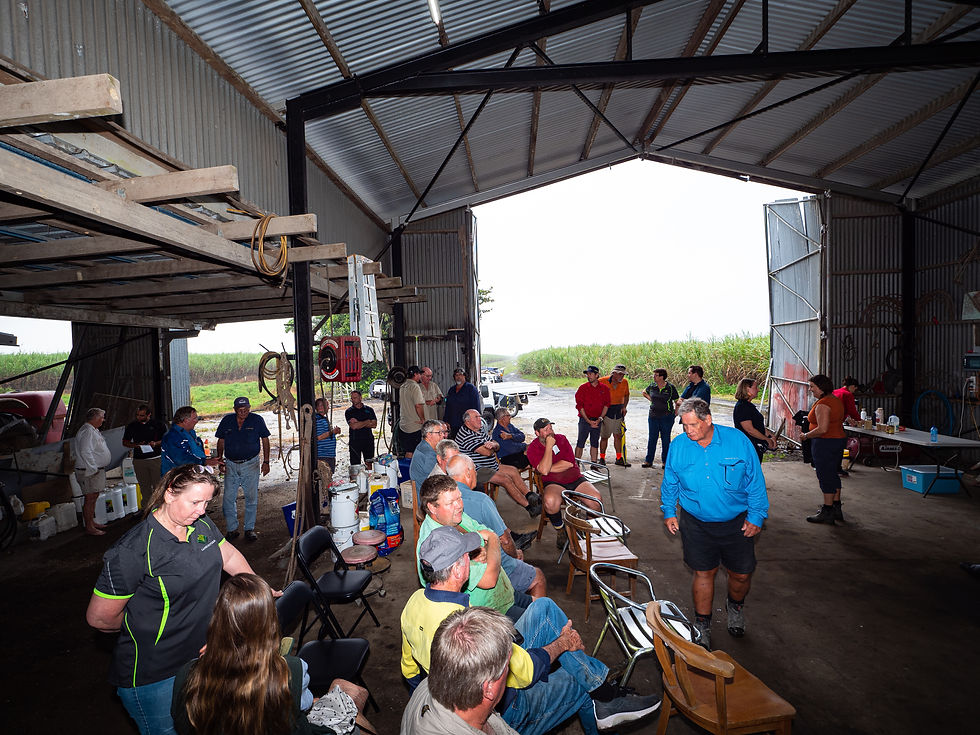
RRRC translates complex water quality science into practical guidance for farmers, industry, governments and natural resource managers. Through reports, decision-support tools, workshops and forums, we help turn research into management actions that improve water quality across northern Australia.

The knowledge generated through RRRC programs informs decisions across all levels of management. Our work supports Australian and Queensland Government agencies, the Great Barrier Reef Marine Park Authority, agricultural industries, regional NRM organisations and producers working to improve catchment and reef health.

Improving water quality depends on people as much as science. RRRC works alongside growers, landholders and regional partners to share knowledge, build capability and support the adoption of practices that deliver lasting improvements for catchments, rivers and the Great Barrier Reef.
Great Barrier Reef
Over two decades, RRRC has helped design, coordinate and deliver collaborative research programs that address some of the Great Barrier Reef’s most complex management challenges. Working across science, government, industry, Traditional Owners and communities, we ensure research is targeted, integrated, and aligned with the priorities of Reef managers.
Our programs have generated new knowledge on reef ecosystems, Crown-of-thorns starfish, water quality, climate impacts, protected areas and sustainable resource use. More importantly, they have helped turn that knowledge into management actions, policy, monitoring programs and on-ground conservation outcomes.
Our work has contributed to:
-
Crown-of-thorns starfish research and coordinated control programs
-
Improved understanding of reef resilience and climate impacts
-
Water quality management for Reef catchments
-
Sustainable management of marine parks and protected areas
-
Research supporting the management of turtles, dugongs, seagrass and coral ecosystems
-
Knowledge that informs government, industry and Traditional Owner decision-making
-
Collaborative partnerships connecting research with Reef management
-
Practical tools and evidence for long-term Reef stewardship
Reef stewardship, healthy ecosystems, and sustainable communities

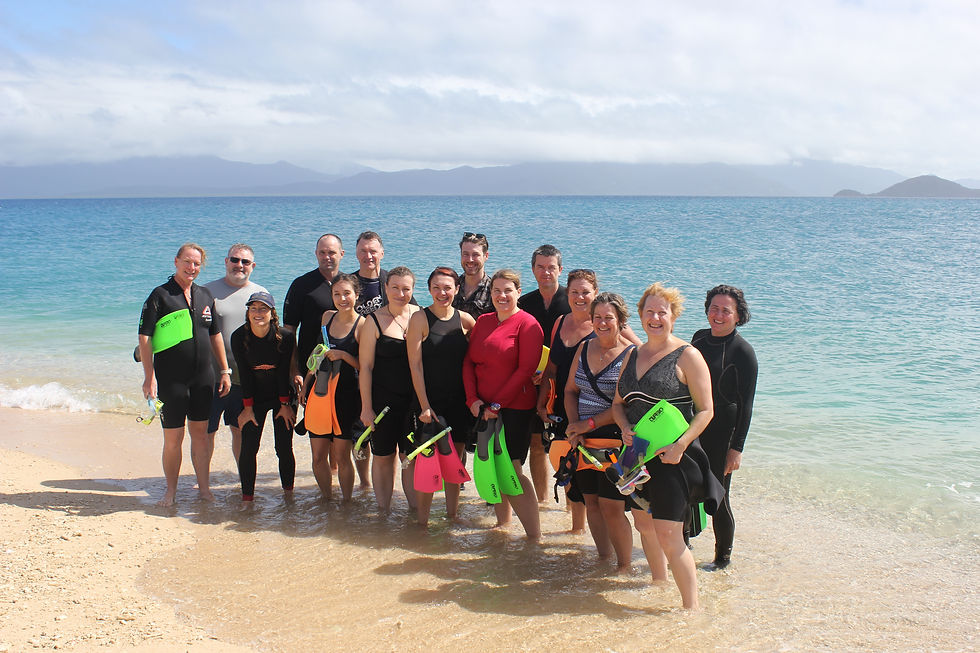
The Crown-of-thorns starfish (COTS) Integrated Pest Management Program demonstrates RRRC’s ability to coordinate complex, multi-partner environmental programs. Working with researchers, the Great Barrier Reef Marine Park Authority, tourism operators, Traditional Owners and governments, RRRC brings together the expertise, partnerships and governance needed to protect one of the world’s most significant marine ecosystems.

Successful COTS management relies on more than control operations. RRRC coordinates research, monitoring, innovation and on-water delivery to ensure scientific knowledge informs where, when and how management actions are implemented, maximising protection of priority reefs across the Great Barrier Reef.

The COTS Integrated Pest Management Program demonstrates how long-term partnerships, adaptive management and evidence-based decision-making can deliver lasting environmental outcomes. Coordinated by RRRC, the program continues to strengthen reef resilience by ensuring research is translated into practical action where it is needed most.

Wet Tropics Ecosystems
RRRC partners with Australia’s leading researchers, Traditional Owners, governments and land managers to generate the knowledge needed to conserve and manage the Wet Tropics World Heritage Area. By coordinating collaborative research and connecting science with management, we help protect one of the world’s most significant tropical ecosystems.
Our work has improved understanding of biodiversity, threatened species, ecosystem resilience, climate change, restoration, cultural landscapes, and environmental management. Through long-term partnerships and knowledge exchange, we ensure research informs conservation planning, environmental management and policy across the Wet Tropics.
Achievements of RRRC-supported research include:
-
Conservation of threatened species including cassowaries and spectacled flying-foxes
-
Climate change impacts and adaptation for tropical ecosystems
-
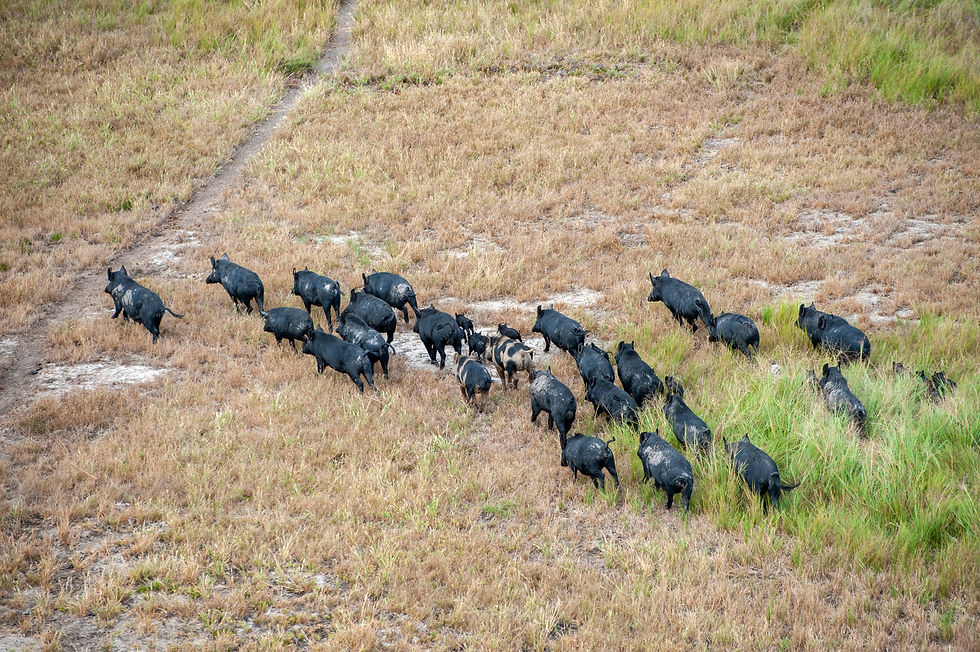
Innovative restoration and invasive species management
-
Biodiversity and ecosystem resilience research
-
Traditional knowledge informing conservation planning
-
Practical tools supporting environmental management and policy
Protecting Wet Tropics ecosystems and the communities they support

Through the National Environmental Science Program (NERP) Tropical Ecosystems Hub, RRRC coordinated one of Australia’s largest collaborative tropical research programs. Bringing together researchers, government agencies and land managers, the Hub generated practical knowledge to support conservation and management of the Wet Tropics World Heritage Area.
Research coordinated by RRRC has improved understanding of threatened species, climate change, ecosystem resilience, invasive species and restoration. By aligning research with management priorities, new knowledge has directly informed conservation planning and environmental decision-making across the Wet Tropics.
Research creates lasting value when it is shared and applied. RRRC translates science through publications, workshops, partnerships and long-term knowledge management, ensuring new evidence informs policy, on-ground management and future conservation across the Wet Tropics.

Papua New Guinea & Torres Strait
Building regional capability across northern Australia and Papua New Guinea
RRRC works across northern Australia, Papua New Guinea and the Torres Strait to strengthen community leadership, build local capability and support sustainable development. Working alongside communities, Traditional Owners, governments and regional organisations, we design and deliver programs that respond to local priorities while creating long-term environmental, social and economic benefits.
From empowering villages in Papua New Guinea to supporting Indigenous Sea Country management in the Torres Strait, RRRC connects people, knowledge and partnerships across one of Australia’s most important neighbouring regions. Our long-term presence, trusted relationships and practical approach enable communities to build resilience, strengthen governance and sustainably manage the resources that support their future.
Our programs have delivered lasting impacts including:
-
Community Ranger networks established across more than 40 villages
-
Local leadership, governance and employment strengthened
-
Sustainable management of Sea Country and culturally significant resources
-
Community resilience through improved livelihoods, health and environmental management
-
Partnerships connecting communities, governments and research organisations
-
Traditional Knowledge integrated with science and regional planning
-
Long-term capacity supporting resilient communities across the northern region

RRRC adapted Australia’s Indigenous Ranger model to create a Community Ranger program tailored for Papua New Guinea. From an initial 13 Treaty Villages, the program expanded to more than 40 communities across Western Province, building local leadership and long-term resilience.

Supported by the Australian Government through the Department of Foreign Affairs and Trade (DFAT), the Community Ranger program builds local leadership, practical skills and governance capacity, empowering communities to address challenges including health, sanitation, food security, environmental management and disaster resilience.

Today, Community Rangers are delivering locally led programs that improve health, food security, sanitation, environmental management and disaster resilience. The model continues under PNG leadership, creating lasting benefits long after the initial investment.

In the Torres Strait, RRRC-managed research supports communities and regional managers to monitor and sustainably manage marine resources, with a focus on species reliant on healthy seagrass ecosystems. Long-term monitoring sites contribute to a coordinated regional program, with Torres Strait Regional Authority Marine Rangers leading data collection.

Monitoring programs are co-designed by scientists and Torres Strait Rangers, combining Traditional Knowledge with western science. Together, these knowledge systems support better-informed decision-making for Sea Country management while reflecting local priorities, culture and generations of experience.

Research generated through these partnerships supports the sustainable management of dugongs, turtles, seagrass meadows and shellfish reefs, helping communities protect cultural values, maintain customary practices and care for one of Australia’s most significant marine regions.

Indigenous Partnerships & Leadership
Traditional Knowledge, Indigenous leadership, and caring for Country
RRRC partners with Aboriginal and Torres Strait Islander peoples, organisations and Traditional Owners to co-design research, strengthen Indigenous leadership and support the stewardship of Country and Sea Country. Through long-term relationships built on trust and respect, we help ensure Indigenous priorities shape research, environmental management and decision-making.
Our work spans Indigenous-led research frameworks, leadership development, culturally safe training, ranger partnerships and knowledge exchange. By bringing Traditional Knowledge together with western science, RRRC helps create practical solutions that strengthen culture, build capability and deliver lasting environmental, social and economic outcomes.
Achievements of our programs include:
-
Indigenous-led research frameworks established across northern Australia
-
Traditional Knowledge informing environmental planning and management
-
Indigenous women supported to gain nationally recognised qualifications
-
Leadership and employment pathways created through community-based programs
-
Ranger partnerships strengthening Country and Sea Country stewardship
-
Research co-designed with Traditional Owners and Indigenous organisations
-
Long-term partnerships built on trust, respect and shared decision-making

RRRC supported the scoping and development of the National Indigenous Environmental Research Network (NIERN), an Indigenous-led initiative under the National Environmental Science Program. The project laid the foundations for a nationally owned research framework that empowers Aboriginal and Torres Strait Islander peoples to identify research priorities and lead environmental science on Country.

Working alongside Indigenous leaders, researchers and government partners, RRRC helped develop governance and operational models that support Indigenous-led research and decision-making. The project demonstrated the value of combining cultural authority, Traditional Knowledge and western science to strengthen environmental management across Australia.

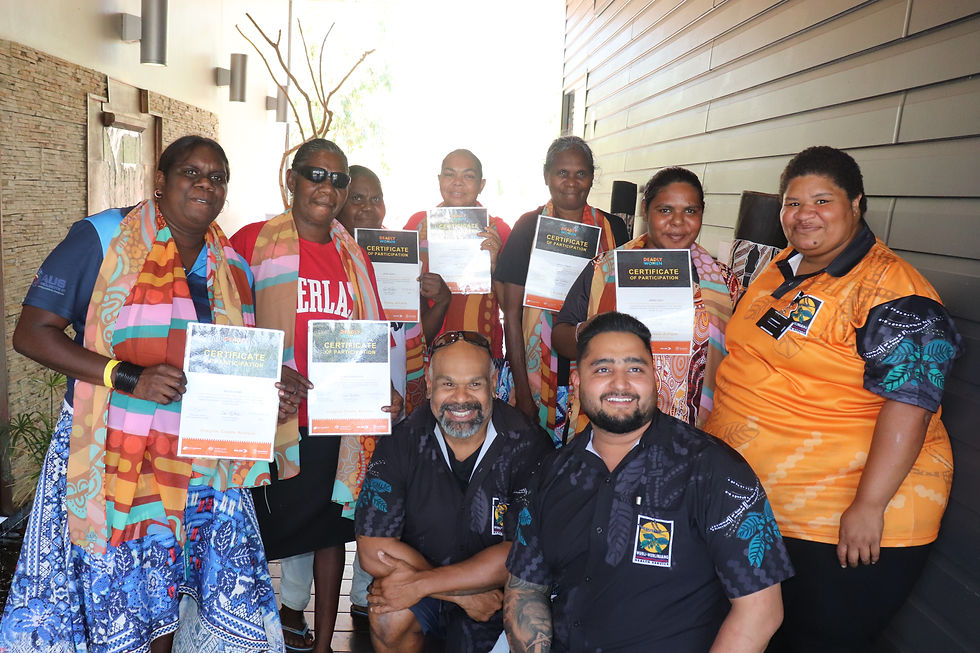
RRRC developed the Deadly Women Indigenous Leadership and Training Program in response to the need for accessible, culturally safe training opportunities for Indigenous women across northern Australia. Delivered with professional trainers and Indigenous mentors, the program provided free, community-based vocational education in tourism, workplace skills and business development.

Between 2021 and 2024, more than 50 Indigenous women graduated with nationally recognised qualifications, many progressing into employment, further education or small business. Beyond formal qualifications, participants built confidence, digital skills, peer networks and leadership capability, creating lasting benefits for their families, workplaces and communities.